
A beautiful outfit can lose a sale because of a poorly written description. Online shoppers cannot touch the fabric, test the fit, or examine the stitching, so every missing detail creates another reason to hesitate.
Learning how to write product descriptions for clothing means doing more than describing colors and materials. Strong product copy helps customers imagine wearing an item while answering practical questions about sizing, comfort, quality, and care.
The opportunity is substantial. According to the U.S. Census Bureau, e-commerce accounted for 17.1% of total U.S. retail sales in the second quarter of 2026. For clothing retailers, clear product information is an important part of competing for those purchases.
Start With the Shopper, Not the Garment
Before writing, consider who will wear the clothing and what matters most to that customer.
Someone shopping for office trousers may prioritize wrinkle resistance, comfortable waistbands, and professional styling. A customer buying athletic leggings might care more about stretch, opacity, and moisture management.
The U.S. Small Business Administration recommends market research and competitor analysis to understand customer needs and identify opportunities for differentiation.
Apply this approach to clothing descriptions by examining customer reviews, frequently asked questions, and competitor listings.
Look for recurring concerns about sizing, transparency, fabric weight, and maintenance. These questions reveal what your descriptions should explain.
Build a Product Description Customers Can Scan
A useful clothing description follows a predictable information hierarchy without sounding repetitive.
Write a Search-Friendly Product Title
Begin with the garment category and its most distinguishing attributes.
For example, “Women’s High-Rise Wide-Leg Jeans in Dark Indigo” communicates more than “Premium Everyday Denim.” Include relevant details such as fabric, cut, sleeve length, or color without overcrowding the title.
Open With a Practical Benefit
Your opening sentence should immediately explain the garment’s appeal.
Instead of “This stylish shirt is perfect for every occasion,” write:
“Cut from lightweight cotton poplin, this relaxed button-down offers a crisp finish without feeling overly structured.”
The second version communicates material, texture, and fit.
Finish With Essential Specifications
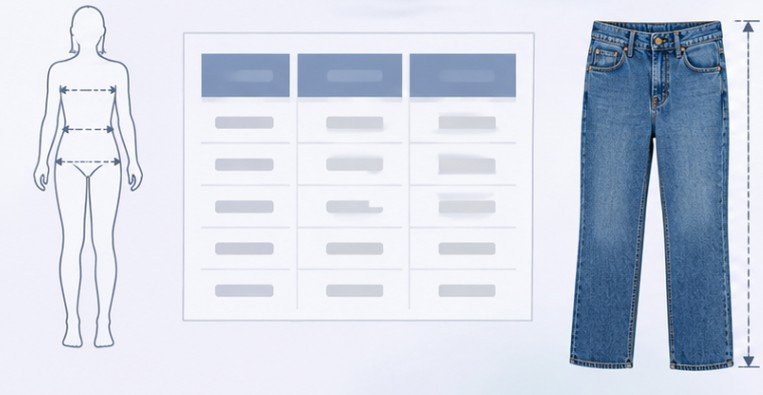
After the introduction, provide an easy-to-scan details section covering fabric composition, fit, closure, measurements, pockets, lining, and care instructions.
Short paragraphs and clearly labeled specifications are particularly useful for mobile shoppers.
Turn Clothing Features Into Everyday Benefits
A compelling description explains what a garment’s construction means for the person wearing it.
Consider a cotton T-shirt.
Saying “Made from 100% cotton” identifies the material but offers limited context.
Describing it as “soft cotton jersey with a relaxed fit for comfortable everyday layering” helps shoppers understand its intended use.
Other examples include a drop-shoulder seam that creates a relaxed silhouette, a concealed zipper that maintains a clean finish, or an adjustable waistband that allows greater flexibility.
However, avoid unsupported promises. Not every cotton garment stays cool, and not every stretchy fabric is suitable for intense exercise.
Product benefits should reflect verified garment characteristics.
Make Fit and Sizing Impossible to Misunderstand
Sizing uncertainty is one of the most important problems clothing descriptions can address.
Terms such as “oversized,” “slim,” and “regular” can mean different things across brands.
Provide actual garment measurements wherever possible, including chest width, length, inseam, and waist dimensions.
For U.S. shoppers, inches should be easy to find, with centimeters available for additional clarity.
Include Model Information
Where appropriate, identify the model’s height and the size worn.
For example:
“Model is 5’8″ and wears size Small. The shirt features a relaxed shoulder and falls just below the hip.”
Explain whether measurements describe the garment itself or recommended body dimensions.
This distinction matters because a 38-inch garment chest measurement does not necessarily mean the item suits someone with a 38-inch chest.
Explain Fit Exceptions
A description should also clarify whether an item is intentionally fitted, cropped, or loose.
Only claim that clothing “runs true to size” when customer feedback, fitting assessments, or reliable product data support that statement.
Use Sensory Details Without Overwriting
Customers appreciate descriptive language, but excessive adjectives quickly weaken credibility.
Replace broad claims such as “luxurious,” “amazing,” and “beautiful” with observations about texture, structure, and movement.
Crisp poplin suggests a structured surface. Brushed fleece communicates a softer interior. Fluid satin describes how fabric moves.
These details help customers visualize clothing more accurately.
Styling suggestions can add value, too. Explain whether a cardigan works over a fitted tank or whether tailored trousers complement loafers.
Keep suggestions realistic and appropriate to the garment’s intended use.
Provide Accurate Fabric and Care Information
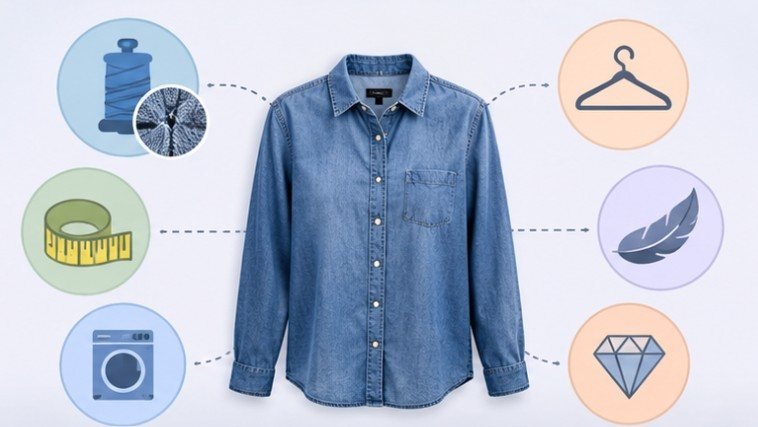
Fabric composition and maintenance requirements deserve special attention in U.S. clothing listings.
The Federal Trade Commission’s textile labeling guidance explains federal requirements involving fiber content, origin, and responsible business identification for covered products.
Retail descriptions should accurately reflect the product’s verified information rather than making assumptions based on appearance.
Similarly, the FTC’s Care Labeling Rule guidance explains that covered manufacturers and importers must provide supported garment-care instructions. If a garment requires cold washing, flat drying, or professional cleaning, communicate those requirements clearly.
Never label a product machine washable simply because similar garments can be washed that way.
Optimize Clothing Descriptions for Google Search
Understanding how to write product descriptions for clothing also involves identifying the phrases customers use when searching.
A customer is more likely to search for “women’s black linen wide-leg pants” than a vague phrase such as “elegant fashion essential.”
Use descriptive keywords naturally in product titles, page headings, meta descriptions, and body copy.
Every product should have distinctive content. Reusing the same generic description across multiple colors, styles, and silhouettes provides little value to shoppers.
Make Product Images Accessible
Image descriptions can communicate visual information that the main product copy may overlook.
The World Wide Web Consortium’s accessibility guidance recommends meaningful text alternatives for informative images.
For example, “Women’s navy linen blazer, front view showing two-button closure” identifies useful visible details.
Alt text should describe the image’s purpose, not become a place to repeat unrelated SEO keywords.
Clothing Product Description Example: Before and After
Consider an imaginary pair of trousers with verified specifications.
Weak Description
“Beautiful black pants made with quality material. Comfortable, trendy, and perfect for any occasion.”
This description offers almost no useful purchasing information.
Improved Description
“Designed for everyday versatility, these black straight-leg trousers feature a mid-rise waistband and a lightly structured finish. The cotton-blend fabric includes a small amount of stretch for easier movement.
The trousers have a concealed front closure, two side pockets, and a full-length silhouette that pairs naturally with sneakers or loafers.
Fabric: 97% cotton, 3% elastane. Model is 5’9″ and wears size 6. Machine wash cold and tumble dry low, according to the garment’s verified care instructions.”
The improved version combines practical details with styling context without relying on exaggerated claims.
A Five-Minute Product Copy Quality Check
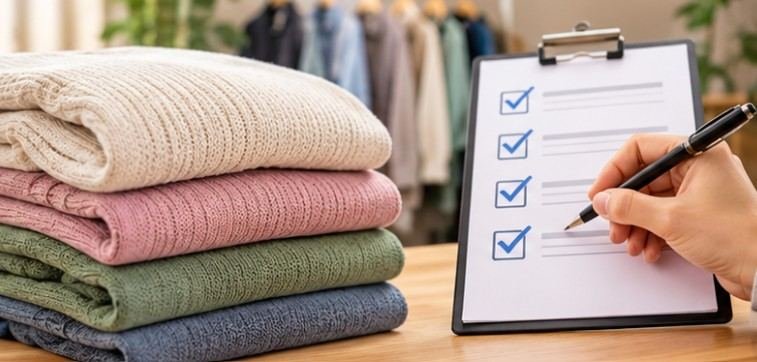
Before publishing, review each description using five questions:
- Identification: Can shoppers immediately recognize the garment and its defining features?
- Benefits: Does the copy explain how verified features affect comfort, appearance, or usability?
- Sizing: Are measurements, fit expectations, and relevant model details clear?
- Accuracy: Do fabric percentages and care instructions match verified product information?
- Search visibility: Are relevant terms included naturally without repetition?
For additional improvement, compare product-page conversion rates, return reasons, and customer questions before and after updating descriptions.
A/B tests can help identify stronger openings, but meaningful results require sufficient traffic and comparable testing conditions.
FAQs
1. How Long Should a Clothing Product Description Be?
Most clothing descriptions benefit from a concise introduction and essential specifications. Around 75–150 words can work for simple garments, while technical or premium clothing may require additional detail.
2. What Keywords Should Clothing Descriptions Include?
Use specific search terms describing garment type, material, fit, color, and intended use. Prioritize phrases customers naturally search for instead of repeating generic fashion keywords.
3. Can AI Write Clothing Product Descriptions?
AI can help draft and organize product copy, but sellers should verify every detail. Generated descriptions may invent fabric properties, measurements, care instructions, or performance benefits.
4. What Is the Biggest Mistake in Clothing Product Copy?
Replacing factual information with exaggerated marketing language. Customers need accurate details about sizing, materials, comfort, and care more than unsupported claims about superior quality.
Final Thoughts
Learning how to write product descriptions for clothing is ultimately about replacing uncertainty with useful information. A strong description does not need dramatic language or lengthy storytelling. It needs to explain the garment accurately, communicate its benefits, and help shoppers decide whether it suits their needs.
I recommend starting with your bestselling products and identifying information customers repeatedly request. Improve those listings with verified specifications, clear sizing guidance, and natural search terms.
Then measure what changes. The best clothing description is not necessarily the one that sounds most persuasive. It is the one that helps customers feel confident about what they are buying.