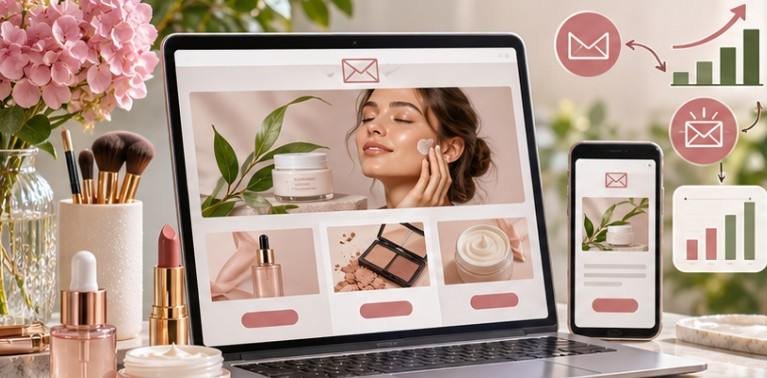
A customer might spend 20 minutes watching skincare tutorials but only a few seconds deciding whether to open a promotional email. That makes relevance more valuable than another flashy discount. The best email marketing ideas for beauty brand growth turn ordinary inbox messages into personalized beauty advice, product discoveries, and timely shopping opportunities.
According to the American Marketing Association, email segmentation helps businesses deliver more relevant messages based on customer preferences and purchasing behavior.
For skincare, cosmetics, and haircare businesses, that means sending customers information they genuinely need instead of constantly asking them to buy.
Why Beauty Brands Need a Different Email Marketing Strategy
Beauty purchases are unusually personal. Customers consider skin sensitivity, product ingredients, hair texture, complexion, lifestyle, and individual preferences before making decisions.
An email promoting a foundation without showing shade variations leaves important questions unanswered. Similarly, marketing an exfoliating serum without explaining its ingredients may discourage cautious shoppers.
The American Marketing Association’s email marketing guide emphasizes segmentation, personalization, and behavior-based targeting as important components of effective campaigns.
For beauty businesses, successful email marketing combines three elements: useful education, convincing product demonstrations, and relevant purchase timing.
12 Email Marketing Ideas That Make Beauty Customers Click
1. Turn Ingredient Education Into Product Discovery
Explain popular ingredients such as hyaluronic acid, vitamin C, ceramides, and niacinamide through short educational campaigns.
A subject line like “What Does Niacinamide Actually Do?” creates curiosity while giving readers useful information. Introduce relevant products only after explaining their benefits and appropriate uses.
2. Build Personalized Beauty Routines
Rather than promoting individual products, demonstrate how several items work together.
Create morning skincare routines, nighttime moisturizing guides, or five-minute makeup tutorials.
For example, a hydration-focused campaign could introduce a gentle cleanser, hydrating serum, and moisturizer, followed by sunscreen in the morning.
3. Introduce Interactive Skin and Shade Quizzes
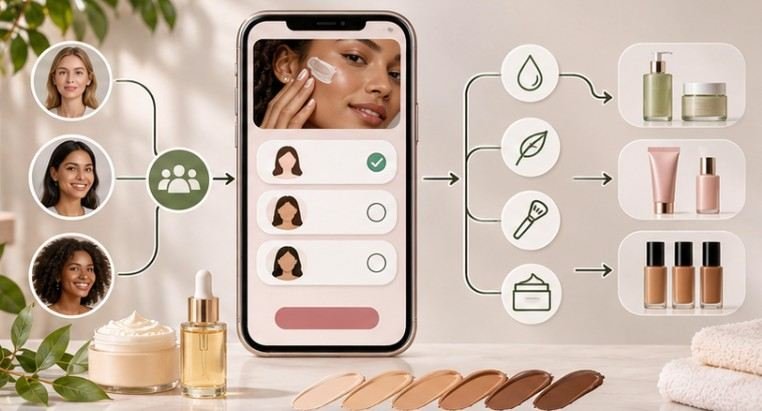
Ask subscribers about their skin concerns, preferred makeup finish, or foundation shade.
Use their answers to recommend suitable products and create targeted email segments.
A shopper interested in lightweight makeup should receive different recommendations from someone seeking full-coverage foundation.
4. Showcase Real Customer Experiences
Feature verified reviews, customer demonstrations, and user-generated content from Instagram or TikTok.
Before-and-after photographs can be persuasive, but they must accurately represent results and should have appropriate customer permissions.
The FTC’s endorsement guidance explains why testimonials must be truthful and why material relationships, including compensated promotions, require appropriate disclosure.
5. Offer Curated Beauty Bundles
Combine complementary products into convenient kits, such as a winter hydration set or an everyday makeup essentials collection.
Explain the purpose of every item and show the savings transparently.
A $60 bundle containing products normally sold individually for $72 offers a $12 saving, or approximately 16.7%. Bundling can increase average order value while simplifying purchasing decisions.
6. Send Restock and Limited-Availability Alerts
Notify interested customers when popular shades, limited-edition collections, or frequently unavailable products return. Use subject lines such as “Your Favorite Lip Shade Is Back.”
Include real inventory information rather than manufacturing scarcity. Automated alerts work particularly well when shoppers have specifically requested notifications.
7. Create Seasonal Beauty Campaigns
Match email content to seasonal concerns experienced by American consumers. Summer campaigns might focus on lightweight cosmetics and appropriate sun protection, while winter emails can highlight moisturizing routines.
Holiday gift guides, bridal makeup collections, and back-to-school beauty essentials also create natural promotional opportunities.
8. Celebrate Customer Milestones
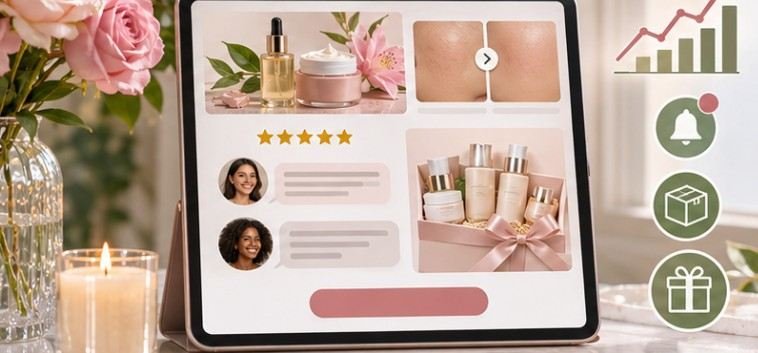
Birthday messages, loyalty rewards, and first-purchase anniversaries can make communication feel more personal.
Offer a birthday gift, early product access, or loyalty points rather than relying exclusively on percentage discounts. Ensure offers have clearly stated expiration dates and eligibility conditions.
9. Recover Abandoned Shopping Carts
Send an automated reminder when a shopper leaves qualifying products in their cart without completing checkout.
The first message can highlight product benefits, shade details, or shipping information.
A later reminder might address common concerns, such as return policies or ingredient compatibility. Discounts should be optional, not the default response to every abandoned cart.
10. Let Customers Meet the Founder
Share the motivation behind the company, formulation philosophy, manufacturing practices, or product-development process.
Authentic storytelling can help emerging beauty brands distinguish themselves from larger competitors.
Avoid unsupported terms such as “chemical-free” or exaggerated safety claims.
The FDA’s cosmetics claims guidance explains that cosmetic claims must be truthful and that certain therapeutic claims can bring products under drug regulations.
11. Launch Replenishment Reminders
Estimate when customers might need another cleanser, moisturizer, shampoo, or foundation.
For example, a product that typically lasts 45–60 days could trigger a reminder around day 40, adjusted using actual customer purchasing patterns.
Make reordering convenient without implying that every customer uses products at the same rate.
12. Reconnect With Inactive Subscribers
Identify customers who have stopped engaging and send a preference-update campaign.
Ask whether they prefer skincare tutorials, new product announcements, or occasional discounts.
Subscribers who remain inactive should eventually be suppressed according to the brand’s list-hygiene policy.
Build a Four-Email Welcome Series That Converts
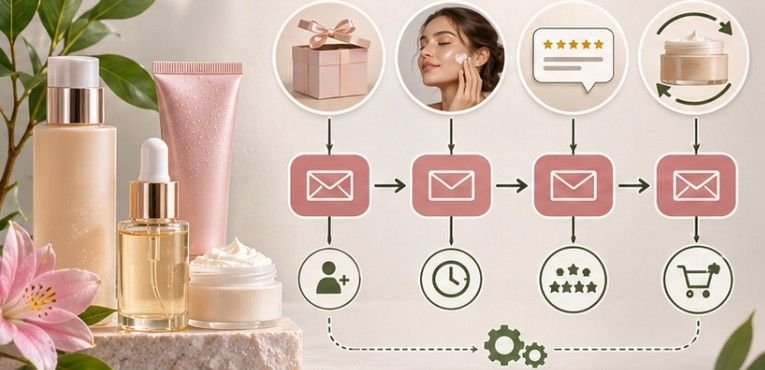
A welcome sequence introduces the brand while gradually learning what subscribers want.
- Day 1: Welcome and introduction
Share the brand’s purpose, bestselling category, and an optional first-order incentive, such as 15% off. - Day 2: Discover customer preferences
Invite subscribers to choose interests such as hydration, sensitive skin, makeup, or haircare. - Day 4: Build product confidence
Explain an ingredient, demonstrate a routine, or share verified formulation information. - Day 6: Provide social proof
Introduce customer favorites with authentic reviews, useful product details, and a clear shopping link.
Suppress subscribers from overlapping promotional sequences when necessary, particularly after they purchase.
Design Beauty Emails for Mobile Shoppers
Beauty marketing depends heavily on visuals, but complicated designs can hurt usability.
Use high-quality texture photographs, accurate makeup swatches, short animated demonstrations, and clear product close-ups.
Keep emails in a single-column layout with readable text, descriptive alternative text, and prominent calls to action.
Avoid placing essential information entirely inside images, since some email applications block images automatically.
For a starting schedule, consider two promotional or educational emails weekly. Increase to three only when engagement supports the additional frequency.
The Mississippi State University Extension’s email marketing advice recommends testing frequency and allowing subscribers to express their communication preferences.
Measure Results With a Simple Campaign Test
The most effective email marketing ideas for beauty brand businesses are tested against actual customer behavior. Compare two subject lines while keeping the audience, design, and offer consistent. For example, test “Discover Our Hydration Collection” against “Three Steps to Softer-Feeling Skin.”
TheUniversity of Colorado’s A/B testing guidance explains how changing one email component helps marketers evaluate differences in engagement.
Track click-through rates, purchase conversions, revenue per delivered email, and unsubscribe rates rather than relying entirely on opens.
Consider this hypothetical campaign:
| Measurement | Result |
| Emails delivered | 5,000 |
| Unique clicks | 150 |
| Purchases attributed | 15 |
| Revenue at $40 per order | $600 |
That represents a 3% click-through rate and a 10% click-to-purchase conversion rate. These are illustrative figures, not industry benchmarks.
For US compliance, the FTC’s CAN-SPAM compliance guide requires commercial emails to include accurate sender information, a valid postal address, and an effective opt-out method. Opt-out requests must be honored within 10 business days.
Frequently Asked Questions
1.What types of beauty marketing emails generate sales?
Personalized product recommendations, replenishment reminders, educational tutorials, abandoned-cart messages, and relevant bundles can support sales. Effectiveness depends on audience preferences, product demand, and campaign execution.
2. How often should a beauty brand send emails?
Start with one or two weekly campaigns and evaluate engagement. Some audiences tolerate three or more, while others prefer less frequent communication.
3. What are the best email marketing ideas for beauty brand startups?
Begin with a welcome sequence, ingredient education, authentic customer testimonials, and abandoned-cart reminders. These campaigns offer a manageable foundation without requiring an extensive marketing budget.
4. How can beauty brands improve email conversions?
Segment subscribers, explain product benefits clearly, show accurate swatches, simplify mobile shopping, and test individual campaign elements. Monitor purchasing behavior rather than focusing exclusively on open rates.
Final Thoughts
Successful beauty email marketing starts with understanding why someone purchased a product, what they expect from it, and what information could improve their experience.
I recommend prioritizing education and personalization before expanding promotional campaigns. A practical routine tutorial may create more lasting value than another generic sale announcement.
Start with a welcome sequence, introduce customer preference tracking, and test one new campaign concept every few weeks. Review the results before increasing email frequency.
Ultimately, the strongest beauty brands make subscribers feel understood, not constantly targeted. An email that solves a small beauty problem today can earn the trust behind tomorrow’s purchase.