
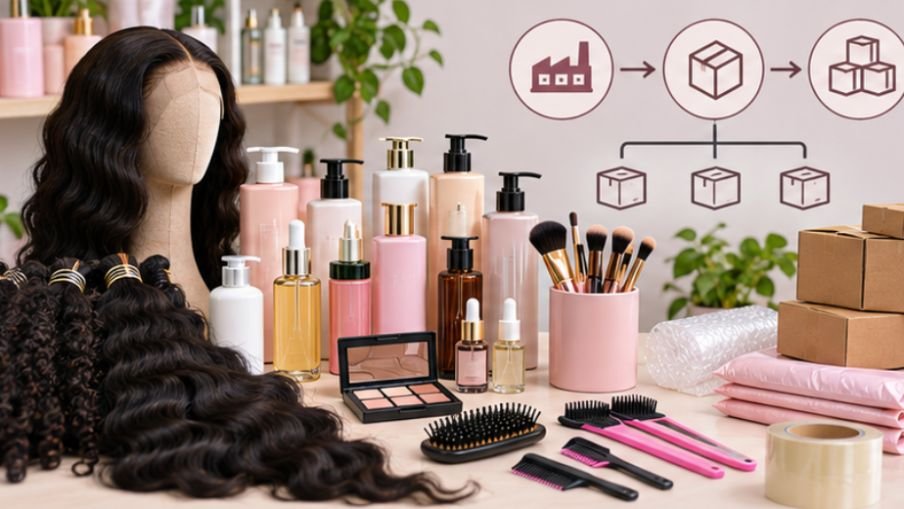
A beauty supply business doesn’t need an expensive storefront, hundreds of products, or a massive startup budget to succeed. What matters more is understanding your customers, finding reliable suppliers, and creating a shopping experience that earns repeat purchases.
Learning how to start a beauty supply store online gives aspiring entrepreneurs an opportunity to enter the US beauty market without committing to traditional retail overhead.
From sourcing wholesale cosmetics to building an e-commerce website, the process requires careful financial planning and smart marketing. Here’s how to turn a promising beauty business idea into a functioning online store.
Find Your Place in the Competitive Beauty Market
The biggest mistake new beauty retailers make is trying to sell everything immediately.
Successful independent stores often differentiate themselves by serving a specific customer group rather than competing directly with major retailers like Ulta Beauty or Sephora.
Consider specializing in textured hair products, professional salon supplies, affordable skincare, protective styling accessories, or vegan cosmetics.
Entrepreneurs interested in expanding into professional beauty services can also explore how to start a mobile makeup artist business for insights into choosing a makeup specialty, building a client base, and establishing a beauty business.
Research What Customers Actually Want
Before purchasing inventory, investigate customer demand using Google Trends, Amazon reviews, TikTok searches, and competitor websites.
Look beyond popular products. Pay attention to recurring complaints about pricing, availability, ingredient transparency, and shipping.
For example, customers searching for affordable curly hair products may struggle to find complete routines from one retailer. Offering compatible shampoos, conditioners, and styling creams could solve that problem.
Test your concept by identifying 10 potential products, comparing competitors’ prices, and surveying prospective customers.
A focused niche makes inventory decisions, branding, and advertising considerably easier.
Choose a Business Model That Fits Your Budget
Understanding how to start a beauty supply store online begins with deciding who owns, stores, and ships your products.
Three business models offer different financial advantages.
Wholesale Inventory
Wholesale retailers purchase beauty products from manufacturers or authorized distributors at discounted prices.
You control packaging, inventory availability, and delivery quality, but purchasing stock requires upfront investment.
This model works particularly well for established beauty brands, hair accessories, and frequently purchased personal care products.
Dropshipping
Dropshipping suppliers store products and ship directly to customers after receiving orders.
Startup costs can be lower because you don’t purchase inventory beforehand.
However, supplier delays, limited quality control, and smaller per-order profits can make customer retention difficult.
Always order samples before listing products.
Private Label Beauty Products
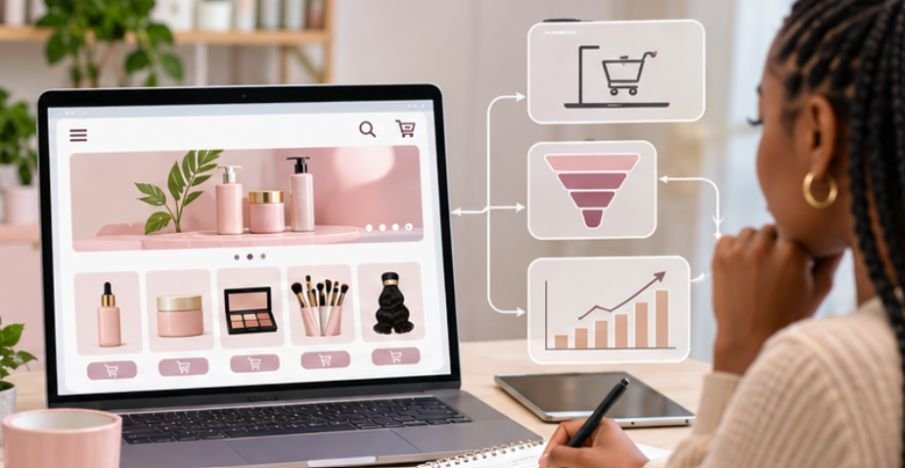
Private labeling involves selling products manufactured by another company under your own brand.
It offers opportunities for product differentiation and stronger brand recognition.
However, minimum order quantities, packaging costs, testing, and regulatory responsibilities make it more complex than ordinary resale.
Beginners may find wholesale inventory or carefully vetted dropshipping easier to manage.
Register Your Online Beauty Business Legally
A professional website doesn’t automatically make your operation legally compliant.
The US Small Business Administration explains that business registration, licensing, and permit requirements depend on your location and business structure.
Many entrepreneurs establish a limited liability company (LLC), although sole proprietorships and corporations are alternatives.
An LLC may separate certain business liabilities from personal finances, but it doesn’t replace insurance or guarantee complete protection.
After registration, request an Employer Identification Number through the Internal Revenue Service. Eligible businesses can obtain one for free.
You should also investigate state seller’s permits, resale certificates, local business licenses, and sales tax obligations.
A resale certificate generally supports qualifying tax-exempt inventory purchases; it isn’t a universal substitute for a sales tax permit.
Online sellers may develop sales tax obligations in additional states when economic nexus thresholds are reached.
Understand Cosmetics Regulations
Beauty retailers must distinguish ordinary cosmetics from products regulated as drugs.
The Food and Drug Administration explains registration and product-listing requirements under the Modernization of Cosmetics Regulation Act.
These requirements generally concern manufacturers, processors, and designated responsible persons, with certain exemptions.
A retailer selling established brands doesn’t automatically face identical obligations to a private-label manufacturer.
Products making acne-treatment, sunscreen, or other drug claims may face additional regulation.
Review product labeling, ingredient information, supplier documentation, and insurance coverage before launching.
Find Reliable Wholesale Beauty Suppliers

Your supplier affects almost every aspect of the customer experience.
Research authorized brand distributors, domestic beauty wholesalers, manufacturer-direct programs, and reputable wholesale marketplaces.
Request business credentials, wholesale catalogs, minimum order quantities, shipping policies, and product authenticity documentation.
Avoid buying branded cosmetics from unknown sellers offering suspiciously low prices.
Counterfeit or improperly stored products can damage customer trust and create legal or safety problems.
Evaluate Suppliers Before Committing
A practical supplier assessment should cover product authenticity, replenishment speed, damaged-goods policies, expiration dates, and realistic shipping costs.
Place a small test order whenever possible.
Inspect packaging, compare received products with manufacturer specifications, and document batch information.
For temperature-sensitive formulas, ask how products are stored and transported.
Reliable suppliers are often more valuable than the cheapest wholesale prices.
Calculate Your Startup Costs and Profit Potential
Online beauty retail expenses vary significantly depending on inventory, fulfillment, and branding.
The following figures illustrate a hypothetical small wholesale launch rather than verified industry averages.
| Startup expense | Example budget |
| Initial inventory | $2,000 |
| Business setup and insurance | $600 |
| Website and domain | $250 |
| Packaging and supplies | $300 |
| Photography and branding | $350 |
| Initial marketing | $500 |
| Total | $4,000 |
Dropshipping may require less inventory capital, while private labeling can require considerably more.
Calculate Profit Before Choosing Products
Suppose a hair conditioner sells for $20.
Its wholesale cost is $9, packaging costs $1, payment processing costs $0.90, and the retailer pays $4 for shipping.
That leaves $5.10 before advertising, returns, taxes, and overhead.
The contribution margin is 25.5%.
This calculation explains why high sales volume doesn’t always translate into meaningful profits.
Beauty entrepreneurs developing their own product lines should also understand how to calculate profitable retail prices, and this guide on how to price handmade skincare products explains how ingredient, packaging, and production expenses influence pricing decisions.
Evaluate profitability using actual order costs rather than relying on advertised wholesale margins.
Build an E-Commerce Website Customers Trust
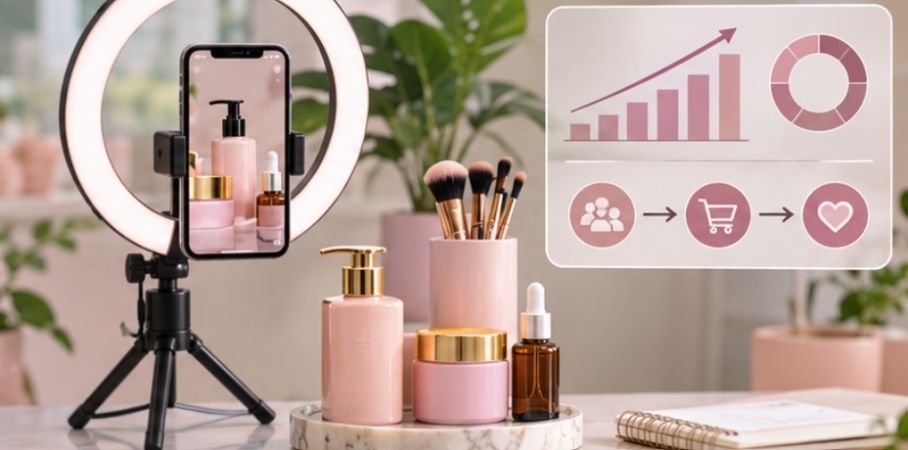
Your website should make discovering, comparing, and purchasing products effortless.
Shopify and BigCommerce offer hosted e-commerce solutions, while WooCommerce provides greater customization for WordPress users.
Choose a memorable domain, establish consistent branding, and organize products into searchable categories.
Every product page should include accurate descriptions, ingredients where appropriate, sizes, application guidance, pricing, and clear photographs.
Offer trusted payment methods through compatible providers such as Stripe, PayPal, or Square.
Mobile-friendly navigation matters because many shoppers discover beauty products through social media.
Make Shipping and Returns Transparent
Display delivery expectations, shipping charges, contact information, and return conditions before checkout.
The Federal Trade Commission explains that online sellers must meet applicable shipping promises and provide required delay notifications or refunds.
Beauty products may also need special handling because of leakage, temperature sensitivity, or transportation restrictions.
To minimize damage during delivery, online beauty retailers can follow these practical tips on how to ship fragile beauty products safely, including choosing suitable protective packaging and handling products carefully during transit.
Create clear policies for unopened products, damaged shipments, and hygiene-related returns.
Attract Customers Through Search and Social Media
A beautiful website cannot generate revenue without qualified traffic.
Start by optimizing product titles, category descriptions, image alt text, and page metadata around relevant search terms.
Connect Google Search Console, Google Analytics, and Google Merchant Center where appropriate.
Publish useful content addressing customer problems, such as choosing products for different hair textures or understanding skincare ingredients.
On Instagram, TikTok, and YouTube, demonstrate actual product applications rather than relying entirely on promotional graphics.
Collaborate with hairstylists, beauty schools, makeup artists, and small creators whose audiences match your niche.
Encourage verified customer reviews, offer complementary product bundles, and use permission-based email marketing to support repeat purchases.
Launch Small, Measure Results, and Expand Carefully
Instead of launching with 200 products, consider testing 15–25 carefully selected items.
Track conversion rate, average order value, customer acquisition cost, return rate, and inventory turnover.
Identify products that generate repeat purchases and remove those that consistently underperform.
Avoid expanding simply because a supplier offers attractive bulk discounts.
Reinvest in dependable inventory, improved product content, and marketing channels that produce measurable sales.
Frequently Asked Questions
1. How much money do I need to start an online beauty supply store?
A small dropshipping operation may require a few hundred dollars, while an inventory-based store can require several thousand. Actual costs depend on suppliers, licensing, technology, and marketing.
2. Can I sell beauty products online without an LLC?
Yes, depending on applicable laws. Sole proprietorships are possible, although an LLC may provide liability advantages. Business licenses and tax obligations can still apply.
3. Do I need FDA approval to sell cosmetics online?
Most ordinary cosmetics don’t require FDA premarket approval, but applicable safety, labeling, and regulatory requirements still apply. Certain products and claims face additional rules.
4. Which beauty products are easiest to sell online?
Hair accessories, everyday styling tools, and established personal care brands can be practical starting categories. Customer demand, supplier reliability, and product margins should determine your selection.
Final Thoughts
Building a successful online beauty supply business isn’t about having the largest catalog or the most expensive website.
It’s about finding a specific customer need and solving it consistently.
Start with a manageable product selection, trustworthy suppliers, appropriate legal protections, and a website that makes shopping simple.
Pay close attention to shipping expenses, customer feedback, and repeat purchase behavior before increasing inventory.
The strongest beauty retailers understand that every order is an opportunity to earn long-term trust.
Begin with one clearly defined audience, test your products carefully, and let proven customer demand guide your next investment.


