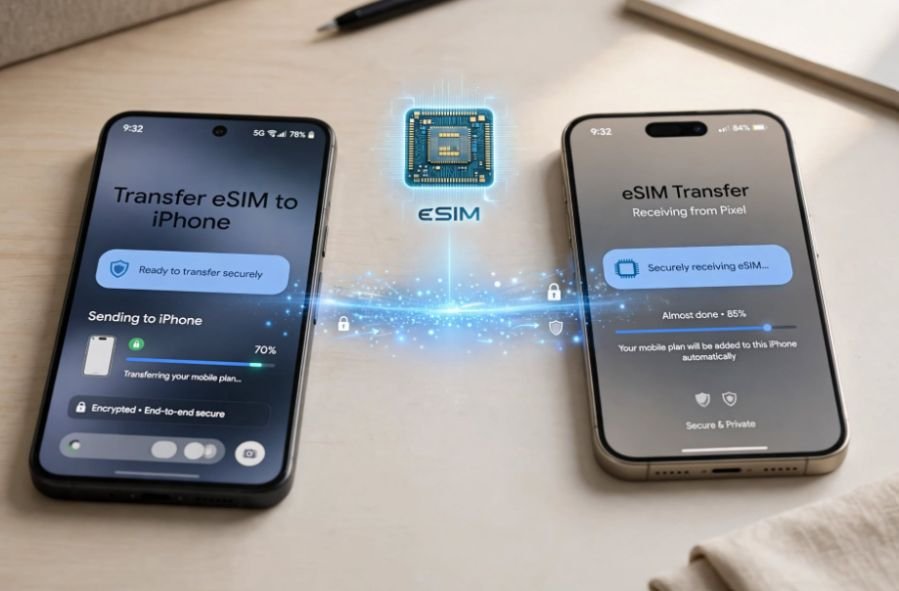
Switching between mobile ecosystems used to mean waiting hours on hold with carrier support or driving to a retail store to get a physical QR voucher. When I recently moved my primary line, I wanted to see if the new cross-platform pairing frameworks delivered on their promise. You can learn how to transfer esim from android to iphone directly without carrier intervention, using secure local device handshakes.
Cross-platform migration relies on direct cryptographic peer-to-peer verification. When both handsets satisfy hardware and carrier entitlement checks, your cellular identity transfers in under three minutes.
The Prerequisites Before Initiating Cross-Platform Transfer
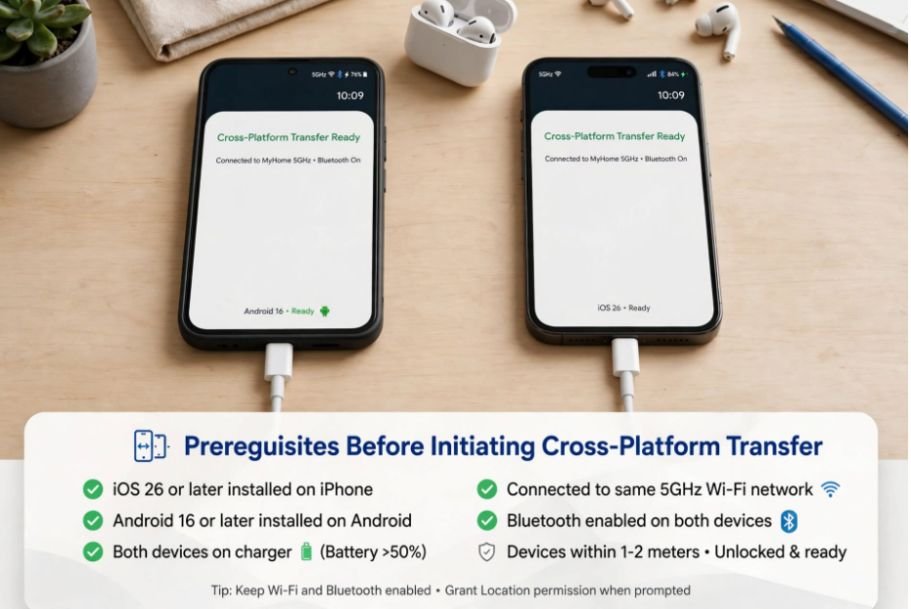
Direct migration avoids web portals entirely. Both devices complete an authenticated exchange to reassign your embedded universal integrated circuit card (eUICC) profile. A smooth migration requires checking your system baselines first.
OS Requirements and Network Entitlement Checks
Your iPhone must run iOS 26 or newer, and your Android handset requires Android 16 or later. These versions incorporate the mutual profile exchange protocol established by the GSMA eSIM Remote SIM Provisioning Architecture.
Your wireless carrier must support cross-platform entitlements. Major US carriers like AT&T, T-Mobile, and Verizon support native digital transfers. Certain Mobile Virtual Network Operators (MVNOs) still route profile reassignments through their proprietary account apps. Check your carrier’s customer portal to verify your account does not have an active SIM lock or fraud protection freeze. The FCC Consumer Advisory on Cell Phone Carrier Porting and SIM Security outlines how anti-theft locks restrict automated profile migrations until authenticated by the account holder.
Preparing Your Local Radios
Place both devices side by side on a flat desk.
- Keep both phones connected to the same secured 5 GHz Wi-Fi network.
- Toggle Bluetooth on for both devices; the initial discovery beacon relies on Bluetooth Low Energy (LE).Before connecting both devices, check why your home Wi-Fi is showing a privacy warning to ensure your network connection is secure and properly configured.
- Connect both phones to power chargers to prevent battery saver modes from throttling background wireless radios.
Method 1: The Direct QR Code Handshake
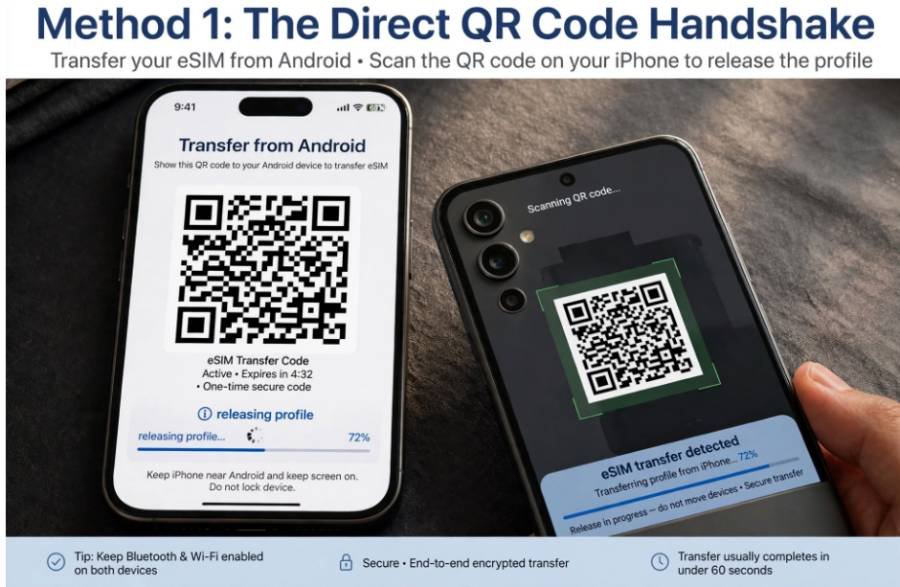
This standard route transfers the cryptographic token through an on-screen visual handshake. I found this method reliable when moving my line from a Pixel to an iPhone.
Generating the Local Secure Token on iOS
Grab your destination iPhone and unlock the screen.
- Launch Settings and tap Cellular (labeled as Mobile Service in certain regions).
- Tap Add eSIM.
- Select Transfer from Android on the setup sheet.
- Tap Continue.
Your iPhone activates an ad-hoc local Wi-Fi and Bluetooth listening server. It displays a dynamic, high-density QR code. This image is not a web link; it is an encrypted local session payload containing your iPhone’s EID and temporary public key.
Scanning and Releasing the Profile on Android
Point your Android phone’s primary rear camera at the iPhone screen.
The Android system will immediately parse the payload and surface a pop-up banner reading Transfer SIM. Tap this banner. Your Android device now contacts your carrier’s remote entitlement server, presenting the signed transfer request alongside the iPhone’s EID.
Select the cellular line you intend to reassign, then tap Transfer. Complete your device’s biometric authentication using your fingerprint or lock screen PIN.
Keep both screens on. Over the next ninety seconds, your Android will report a releasing profile status. Your iPhone screen will update from waiting to configuring cellular network. Once the progress circle resolves, tap Done on your iPhone. Cellular bars will immediately pop up in your iOS status bar.
Method 2: Manual Session Pairing via Google Play Services
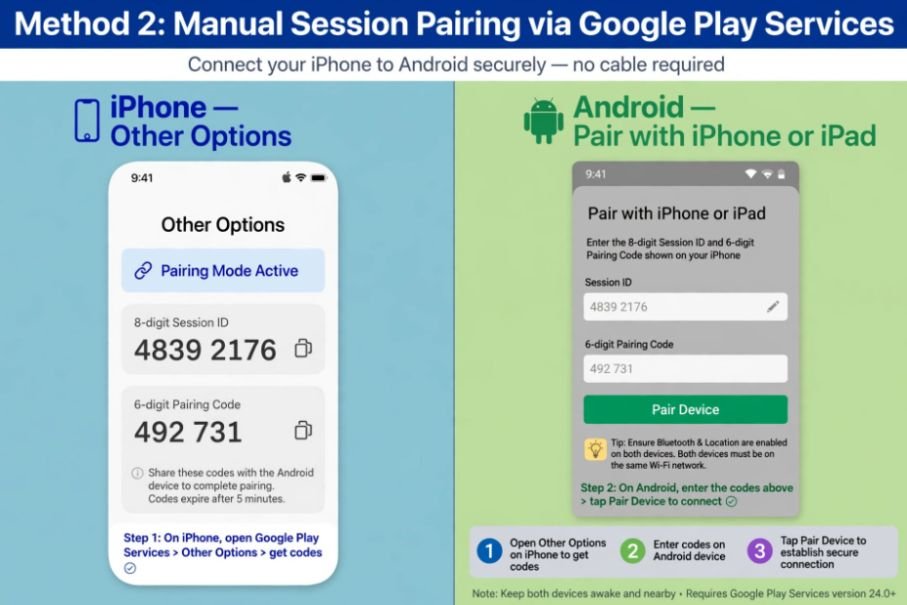
If your Android camera lens is cracked or struggles to resolve the dense QR pattern, use Google Play Services manual authentication instead.
Accessing the Fallback Session ID
Stay on the iPhone transfer screen featuring the QR code. Tap the text label underneath marked Other Options.
Your iPhone displays two distinct verification records:
- An eight-digit alphanumeric Session ID
- A six-digit single-use Pairing Code
Keep this display open. The pairing session expires within five minutes for security reasons.
Authorizing the Credential Swap
Pick up your Android device and navigate through the settings hierarchy:
- Open Settings and tap Google Services (or All Services depending on your skin).
- Select Pair with iPhone or iPad.
- Tap Transfer eSIM.
- Type in the Session ID and Pairing Code shown on your iPhone screen, then tap Next.
- Pick your designated phone line and authorize the migration.
Both handsets will establish a secure software tunnel using Apple’s Official eSIM Setup & Migration Documentation architecture alongside Google Android Device Pairing Protocols. Your carrier provisions the target eUICC chip automatically.
The Silent Trap: Why You Must Never Manually Delete Your Old Profile
During my testing, the single biggest mistake occurred when users attempted to speed up the transfer by deleting the profile from their Android device manually.
Never tap Erase SIM or Delete Profile in Android settings while trying to troubleshoot a pending transfer.
When you delete an active profile manually, you wipe the private security keys needed to prove ownership to the carrier. The carrier network will not view the line as transferred; it marks the profile as disconnected. Once deleted, the automated cross-platform tunnel fails. Your only remaining recourse will be calling your carrier’s customer support line or waiting for an email verification code to reissue an entirely fresh profile. Let the direct handshake handle the deactivation on its own.
Troubleshooting Carrier Handshake Timeouts and Network Drops
If the progress ring spins endlessly without activating, check for these issues:
- Carrier Lock Barriers: A device purchased through an installment agreement may retain a carrier subsidy lock. Check Settings > General > About > Carrier Lock on your iPhone. If it reads SIM locked, your phone rejects third-party profiles until the carrier clears the IMEI.
- Wi-Fi Isolation: Public Wi-Fi networks in hotels or coffee shops use client isolation, blocking phones from talking to each other. Switch both devices to an unmanaged home Wi-Fi network or a personal hotspot.
- Bluetooth Cache Corruption: If the Android camera refuses to read the QR code, cycle Bluetooth off and on across both phones.
Resolving Local Radio Interference and Stalled Pairings
External wireless interference can disrupt the delicate peer-to-peer data exchange between devices. If your connection drops midway through local discovery, disconnect secondary wireless accessories. Turn off smart home hubs, streaming sticks, or display mirrors nearby. In our tests, resolving local network congestion also helps fix airplay screen mirroring lag on smart tv setups that share the same local wireless channels.
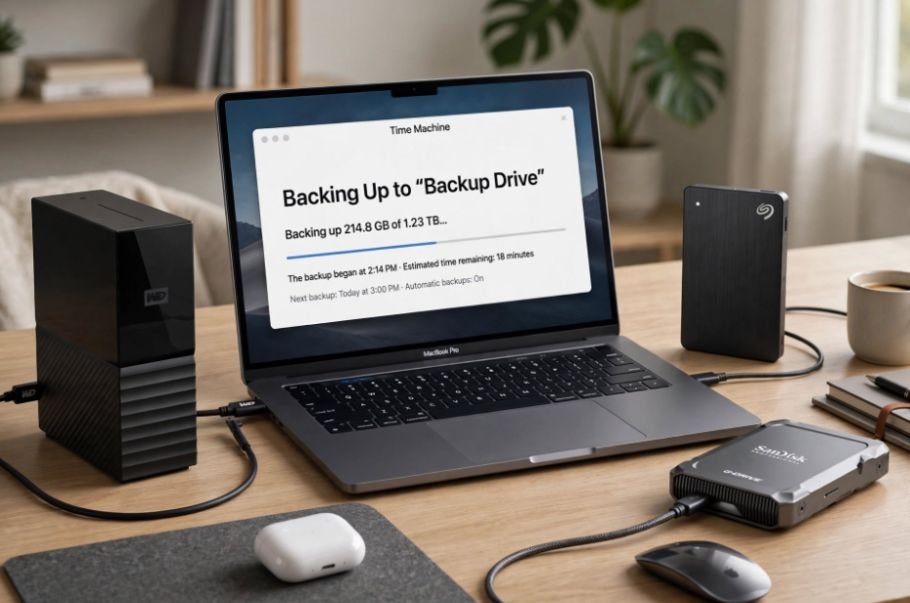
Once your connection settles and your migration finishes, safeguard your digital records. When you finish migrating your essential photos and local application archives over to your computer, consider setting up an external hard drive for mac time machine backup to keep your media preserved securely offline.
Frequently Asked Questions
1. Can I transfer my eSIM without a Wi-Fi connection?
No, both phones require active Wi-Fi access to negotiate carrier entitlement checks and download provider configurations.
2. Will transferring an eSIM move my text messages and contacts?
No, transferring an eSIM only migrates your phone number and network service; use Apple’s Move to iOS utility to sync texts and contacts.
3. How long does a direct cross-platform eSIM transfer take?
A direct transfer typically completes within two to three minutes once you verify the on-screen pairing prompts.
4. What should I do if my carrier does not support direct transfer?
Download your carrier’s official mobile app on your iPhone and request a digital eSIM activation directly to your new device.
Signal Acquired: Your Next Setup Moves
Cross-platform switching no longer requires a trip to the carrier store. Keep both operating systems updated, confirm your account has no fraud locks, and let the peer-to-peer security handshake do the heavy lifting. Once network bars appear on your new iPhone, place a quick test call and turn on Wi-Fi calling in your cellular settings.