I love a perfectly styled blowout or smooth, shiny curls, but I also know how quickly frequent heat styling can leave hair dry, brittle, and frizzy. Flat irons, curling wands, and blow dryers make styling easier, yet excessive heat can weaken hair fibers and contribute to breakage.
Fortunately, learning how to protect hair from heat damage doesn’t mean abandoning your favorite hairstyles. Using a quality heat protectant, choosing lower temperatures, and following a gentle haircare routine can significantly reduce unnecessary damage.
Here are ten practical ways to maintain healthier, more manageable hair while enjoying your favorite styling tools.
What Causes Heat Damage to Hair?
Heat damage occurs when excessive temperatures weaken the protective hair cuticle and alter the proteins responsible for hair strength. Repeated exposure can reduce moisture retention, leaving strands rough, fragile, and prone to split ends.
Common signs include persistent frizz, dullness, tangled strands, increased breakage, and changes in natural curl patterns.
Fine, bleached, chemically treated, and already damaged hair often require extra caution. Although heat damage can develop at different temperatures, no single temperature guarantees damage-free styling.
How to Protect Hair From Heat Damage While Using Styling Tools
1. Why Should You Always Use a Heat Protectant?
A dedicated thermal heat protectant is essential whenever you use hot styling tools. These products contain conditioning agents and protective ingredients that help reduce friction and heat-related stress.
I recommend dividing your hair into manageable sections and applying heat protectant evenly, particularly through the mid-lengths and ends.
Choose lightweight sprays for fine hair and moisturizing creams or serums for thicker textures. Always follow the manufacturer’s application instructions because some products work on damp hair, while others are suitable for dry strands.
Remember that even the best heat protectant cannot eliminate damage.
2. What Is the Safest Temperature for Straightening Hair?
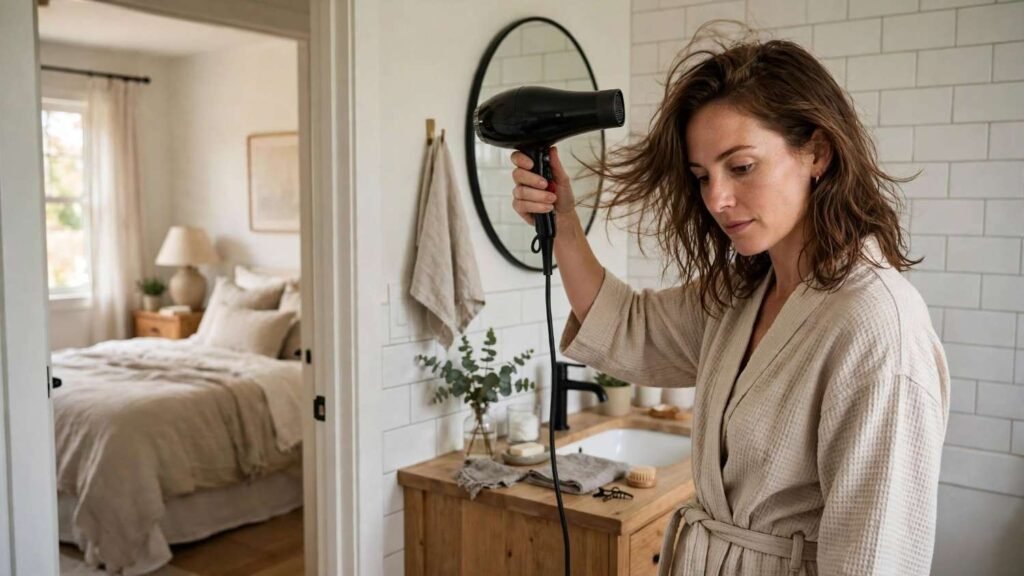
The lowest effective temperature is generally the safest choice.
For fine, fragile, or bleached hair, starting around 250°F–300°F may be appropriate. Thicker or coarser hair sometimes requires higher settings, but that doesn’t automatically make temperatures approaching 400°F safe.
I suggest starting low and gradually adjusting only when necessary. Avoid using maximum heat simply to finish styling faster. Just as you would repair a damaged skin barrier at home by focusing on gentle care and avoiding harsh treatments, protecting your hair requires minimizing excessive heat and maintaining a consistent, nourishing routine.
3. Should You Blow-Dry Hair When It Is Still Wet?
Blow dryers are designed to dry damp hair, but excessive heat on soaking-wet strands can increase unnecessary exposure.
I prefer gently squeezing out excess water with a microfiber towel and allowing my hair to air-dry partially before blow-drying.
If your schedule allows, reaching approximately 80%–90% dryness before finishing with a blow dryer can reduce heated drying time. However, this isn’t a strict requirement for every hair type.
Conventional flat irons and curling wands should only be used on completely dry hair. Applying intense heat to damp strands can rapidly vaporize trapped moisture and cause structural damage.
4. How Can You Blow-Dry Hair Without Damaging It?
Proper blow-drying technique can make a significant difference.
Keep the dryer approximately 6–8 inches from your hair when practical, select a low or medium temperature, and maintain continuous movement.
Use a nozzle attachment to direct airflow along the hair shaft. For naturally curly hair, a diffuser can help preserve curl definition while reducing excessive disturbance.
I also recommend concentrating less heat on older, fragile ends and finishing with cool air when possible.
5. Why Should You Style Hair in Small Sections?
Working with small sections helps you achieve consistent results without repeatedly passing hot tools over the same strands.
Before straightening, gently detangle your hair and divide it into manageable sections. Move the flat iron steadily instead of holding it against one area.
For curling, avoid leaving the barrel against your hair longer than necessary.
This approach minimizes cumulative heat exposure while improving styling efficiency.
6. How Often Can You Heat Style Your Hair Safely?

There is no universally safe weekly frequency because hair condition, temperature, and styling technique all influence damage.
If you currently style your hair daily, consider reducing your sessions to two or three times weekly when practical.
Between sessions, preserve your hairstyle with a loose satin wrap, gentle ponytail, or dry shampoo when appropriate.
Reducing repeated exposure can help prevent further dryness and breakage.
What Haircare Routine Helps Prevent Heat Damage?
7. Can Deep Conditioning Prevent Heat-Related Breakage?
Regular conditioning improves softness, manageability, and resistance to grooming-related friction.
I recommend choosing a gentle shampoo and following each wash with a conditioner suitable for your hair type.
A weekly moisturizing hair mask may benefit particularly dry or frequently styled hair. Keratin-infused and bond-building treatments can also improve certain properties of damaged strands, although they cannot completely reverse severe structural damage.
8. Do Coconut Oil and Argan Oil Help Protect Hair?
Pre-wash oil treatments can support your conditioning routine, especially when your hair feels rough or dry.
Research suggests coconut oil can reduce protein loss from hair when used before or after washing. Argan oil may improve smoothness and manageability, although evidence for its protective effects differs.
I recommend applying a small amount of oil before washing and removing excess product during shampooing.
Neither pure coconut oil nor argan oil should replace a formulated thermal heat protectant.
9. What Are the Best Heatless Hairstyles for Healthy Hair?

Heatless curling ribbons, loose overnight braids, soft rollers, and gentle twist-outs allow you to experiment with hairstyles without direct heat.
For natural curls and coils, a comfortable protective hairstyle can reduce the need for frequent straightening.
Avoid overly tight braids or ponytails because unnecessary tension can also contribute to breakage.
10. Can You Repair Hair That Is Already Heat Damaged?
Severely damaged hair cannot fully regenerate, but targeted care can improve its appearance.
Leave-in conditioners, moisturizing masks, and certain bond-building products may temporarily improve softness, flexibility, and manageability.
I recommend trimming split ends, avoiding repeated heat exposure, and handling fragile strands gently while healthier hair grows.
Frequently Asked Questions (FAQs)
1. Can I Straighten My Hair Every Day Without Heat Damage?
Daily straightening increases cumulative heat exposure, even with protective products. Using lower temperatures, limiting repeated passes, and incorporating heatless hairstyles can reduce the likelihood of additional damage.
2. Does Coconut Oil Work Better Than Heat Protectant Spray?
No. Coconut oil may reduce protein loss during washing, but it isn’t a reliable substitute for a dedicated thermal protectant when using high-temperature styling tools.
3. Should I Apply Heat Protectant to Wet or Dry Hair?
Follow the product instructions. Some formulas work best on damp hair before blow-drying, while others are designed for dry hair. Conventional flat irons require completely dry strands.
4. How Do I Know if My Hair Has Permanent Heat Damage?
Persistent brittleness, breakage, split ends, and loss of curl definition can indicate substantial damage. Conditioning may improve appearance, but severely compromised sections cannot fully return to their original structure.
Final Thoughts
Beautiful hairstyles and healthier hair can coexist when you take a thoughtful approach to heat styling.
For me, the most important lesson about how to protect hair from heat damage is that prevention matters more than trying to repair problems afterward. Applying thermal protection, adjusting temperatures, conditioning regularly, and taking breaks from styling can make a meaningful difference.
Start with small changes, remain consistent, and give your hair the gentle care it deserves.